

Blog · Governance · 5 min read
Verbal Promises in a Strata: Why a Council Decision Must Be Written Down
ManageStrata Team
November 10, 2026
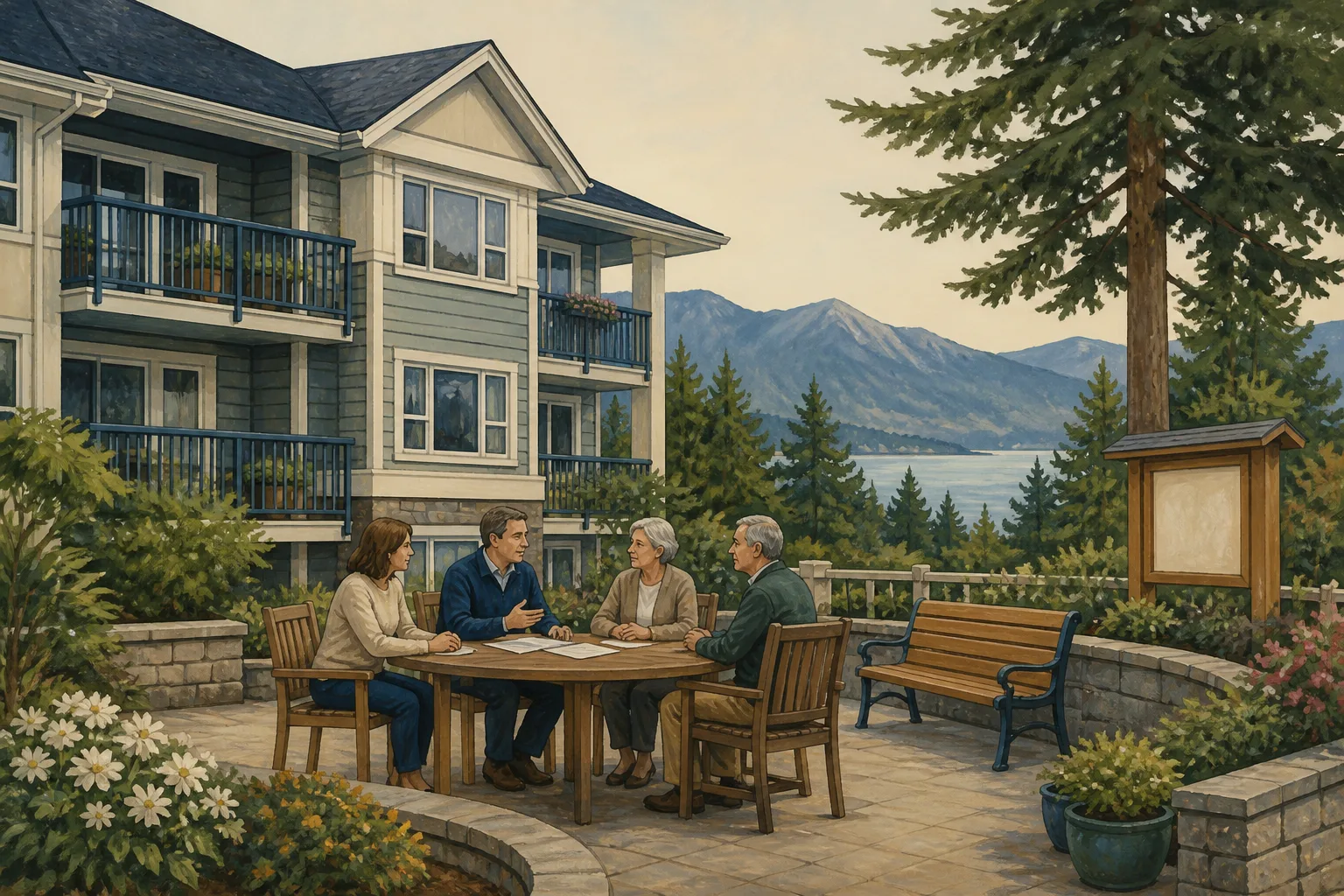
An owner catches a council member in the parkade and asks about swapping out a patio door. The council member says it should be fine. Eighteen months later the door is in, three council members have turned over, and nobody can find a record that anyone approved anything — only two people who remember the conversation differently.
Nothing was hidden here. It simply was never written down, so there is no shared fact for anyone to work from. This post covers how a BC strata council actually makes a decision, where the Act requires that decision to be in writing, and what an owner can do when they were promised something verbally.
A council member talking is not the council deciding
The strata council is a body, not a set of individuals. Under the Standard Bylaws, decisions at council meetings are made by a majority of the council members present at the meeting (Standard Bylaw 18(1)), and the results of all votes at a council meeting must be recorded in the council meeting minutes (Standard Bylaw 18(3)). Quorum rules in Standard Bylaw 16 set how many members must be there for the meeting to count at all.
So a single council member — including the president — cannot approve an alteration, waive a fee, or settle a complaint on their own in a hallway. Those bylaws apply unless your strata has filed amendments that change them, which is worth checking before you rely on any of it. If you are unclear on which documents govern what, our explainer on strata bylaws vs rules in BC sets out the difference.
Council meetings can be held electronically, and council members participating that way are deemed present in person (Standard Bylaw 17). Owners may attend as observers, except for the portions dealing with bylaw contravention hearings or matters where the council believes observers would unreasonably interfere with someone's privacy.
Where the Act itself requires writing
The Strata Property Act does not require every council decision to be delivered in writing, but it names several where writing is mandatory:
- Hearing decisions. An owner or tenant may request a hearing at a council meeting by written application stating the reason. The council must hold that meeting within 4 weeks, and if the purpose is to seek a decision, must give the applicant a written decision within one week after the hearing (s.34.1).
- Enforcement. Before imposing a fine, requiring someone to pay the cost of remedying a contravention, or denying use of a recreational facility, the strata must have received a complaint, given the owner or tenant written particulars and a reasonable opportunity to answer including a hearing if requested, and then given written notice of the decision as soon as feasible (s.135). A council member who is the subject of the complaint must not participate in that decision (s.136).
- Alterations. The Standard Bylaws require an owner to obtain the strata corporation's approval in writing before altering common property, limited common property or common assets, and before altering a strata lot in the listed ways — the structure or exterior of a building, things attached to the exterior, doors and windows facing common property, and more (bylaws 5 and 6 of the Schedule). Approval must not be unreasonably withheld, and the condition the bylaws authorise is the owner's written agreement to take responsibility for the expenses relating to the alteration.
Whether a particular project needs approval at all depends on what is being altered and what your strata plan shows as common property — work done entirely "inside my unit" can still touch common property. That is a facts question, not a blanket rule.
Q&A: owners and verbal assurances
A council member told me my renovation was approved. Is that binding?
Not on its own. The approval the Standard Bylaws contemplate is the strata corporation's written approval, and a council decision is one made at a council meeting and recorded in the minutes. Ask for the written approval before work starts.
Can I appeal a council decision at the AGM?
There is no statutory right to appeal a council decision at a general meeting. What the Act gives you is a hearing at a council meeting under s.34.1, with a written decision within one week where you are seeking a decision. Beyond that, the routes are the Civil Resolution Tribunal or the courts.
What if the council simply does not answer?
Put the request in writing, state the reason, and ask for a hearing. The 4-week clock in s.34.1 starts from the request, and a written request is the thing that can be produced later.
What a healthy strata does about it
Openness is cheaper than argument. Councils that avoid these disputes tend to do the same few things:
- Put every decision through a council meeting, and record the vote in the minutes — including the ones that feel too small to bother with.
- Send approvals, conditions and refusals to the owner in writing, with the reason, so there is one version of what was decided.
- Inform owners about council meetings as soon as feasible after they are called, as Standard Bylaw 14(4) requires.
- Keep the minutes and correspondence where the next council can find them. The Strata Property Regulation sets minimum retention periods — council and general meeting minutes at least 6 years, correspondence at least 2 years — and those are floors, not targets.
Good minutes are the whole mechanism; our guide on preparing AGM minutes in BC applies equally to council minutes. Self-managed councils carry this on their own, which is covered in how to self-manage a strata in BC. When you are trying to reconstruct what was decided years ago, tools like SearchStrata can use AI to search across scanned minutes and documents for the thread you are missing. ManageStrata exists for the same reason: the council or the management company can change, but the corporation's minutes, votes and decision records stay with the corporation, and council can export a full copy at any time.
A promise nobody wrote down is not a decision — it is a memory, and memories move out. This article is general information about BC strata law, not legal advice; verify against the current Strata Property Act and Regulation or consult a BC strata lawyer.
General information, not legal advice. This article explains British Columbia strata law in general terms. The Strata Property Act and its regulations change over time and apply differently to each strata corporation. Confirm details against the current legislation or consult a qualified strata lawyer before acting.
Frequently asked questions
- Is a strata council verbal agreement enforceable in BC?
- Treat it as unreliable. Under the Standard Bylaws, council decisions are made by a majority of council members present at a council meeting and the results of all votes must be recorded in the council meeting minutes, so one member's verbal assurance is not a council decision. For alterations, the Standard Bylaws require the strata corporation's approval in writing before the work begins.
- How do I get a strata council decision in writing?
- Apply in writing for a hearing at a council meeting, stating the reason. Under s.34.1 of the Strata Property Act the council must hold the meeting within 4 weeks of the request, and if the purpose is to seek a decision, must give you a written decision within one week after the hearing.
- The council promised to fix something and never did. What are my options?
- Start with a written request and a s.34.1 hearing so the council's position is on the record in writing. There is no statutory right to appeal a council decision at an AGM or SGM; if the matter is still unresolved, the remaining routes are the Civil Resolution Tribunal or the courts, including a claim that the decision was significantly unfair.
Keep reading
Free guide · 18 pages
Your first term on the strata council
New to the council, or handing the job to someone who is? Ten short chapters on what a BC council actually does, and the deadlines it can’t miss.
A few notes a year on running a strata
Deadlines that catch councils out, what changed in the rules, and what we shipped. Unsubscribe in one click, any time.
Run your strata with confidence
ManageStrata tracks your compliance deadlines, AGMs, and finances — with AI that drafts the work and you approve it. Self-managed or with a manager, the record stays with your corporation. Free up to 4 lots.
Start free