

Blog · Governance · 8 min read
How to Self-Manage a Strata in BC
ManageStrata Team
June 10, 2026

Many smaller strata corporations in British Columbia choose to operate without a professional property manager. Self-management can save thousands of dollars a year, but it also means the strata council takes on the duties the Strata Property Act (SPA) would otherwise delegate to a manager (BC government guidance for strata councils).
What does self-managing a strata actually involve?
Self-management means the elected strata council handles day-to-day operations directly: collecting strata fees, paying bills, maintaining common property, keeping records, holding meetings, and enforcing bylaws. There is no legal requirement to hire a property manager in BC, so any strata can self-manage. In practice it works best for small and mid-size buildings with engaged owners.
Core responsibilities include:
- Finances — billing strata fees, paying invoices, reconciling accounts, and maintaining the operating fund and the contingency reserve fund.
- Governance — running the AGM and council meetings, passing budgets, and keeping bylaws current.
- Records — retaining minutes, financials, contracts, and correspondence, and producing them on request.
- Maintenance — inspecting and repairing common property and assets.
- Insurance — placing and renewing the strata's insurance and tracking coverage.
What are the legal duties of a self-managed council?
The SPA holds the strata corporation (acting through council) to a standard of care. Council members must act honestly, in good faith, and in the best interests of the corporation. Practically, that means:
- Keep proper books and records and make them available to owners (and to buyers via information certificates).
- Hold an Annual General Meeting every year and give proper notice — see AGM notice and quorum.
- Enforce bylaws and rules consistently and fairly, following the SPA's complaint and hearing process.
- Maintain the depreciation report and reserve planning so major repairs are funded.
A council that ignores these duties exposes the strata to disputes at the Civil Resolution Tribunal (CRT), which handles most strata disagreements in BC.
How do you stay organized without a property manager?
The biggest risk in self-management is missed deadlines and lost paperwork. Build a simple operating rhythm:
- A compliance calendar with the AGM date, insurance renewal, fiscal year-end, and depreciation report review. A platform like ManageStrata keeps these deadlines on a compliance calendar so nothing slips.
- A single source of truth for documents — minutes, bylaws, the budget, and contracts — that the whole council can access.
- Clear roles so the treasurer, secretary, and president each own their lane. See council roles and responsibilities.
- A repeatable AGM process, from notice package to minutes.
When reviewing a building's history — say, before a major project — you'll have years of documents to read. To quickly analyze a strata's documents (minutes, depreciation report, bylaws), tools like SearchStrata use AI to surface the key facts so council isn't reading hundreds of pages by hand.
Should every strata self-manage?
Self-management suits strata corporations where owners have time, basic financial literacy, and a willingness to follow process. Large, complex, or conflict-prone buildings often benefit from professional management. A common middle path is hybrid management: self-manage the routine work and hire specialists (bookkeepers, engineers, lawyers) as needed.
Whatever you choose, the obligations under the SPA don't change. Self-managing simply moves the work to council — so the better your systems, the safer your strata.
This article is general information about BC strata law, not legal advice; verify against the current Strata Property Act and Regulation or consult a BC strata lawyer.
General information, not legal advice. This article explains British Columbia strata law in general terms. The Strata Property Act and its regulations change over time and apply differently to each strata corporation. Confirm details against the current legislation or consult a qualified strata lawyer before acting.
Frequently asked questions
- Is it legal to self-manage a strata in BC?
- Yes. There is no requirement in the Strata Property Act to hire a property manager. Any strata corporation can be self-managed by its elected council, provided the council fulfills the corporation's legal duties around finances, meetings, records, and maintenance.
- What's the hardest part of self-managing a strata?
- Staying on top of recurring obligations — the AGM, insurance renewal, budget, and depreciation report — without missing deadlines. A shared compliance calendar and a single document repository solve most of the pain.
- Can a self-managed strata still hire help?
- Absolutely. Many self-managed stratas use a hybrid model: council handles routine operations and brings in bookkeepers, engineers, or lawyers for specialized tasks.
Keep reading
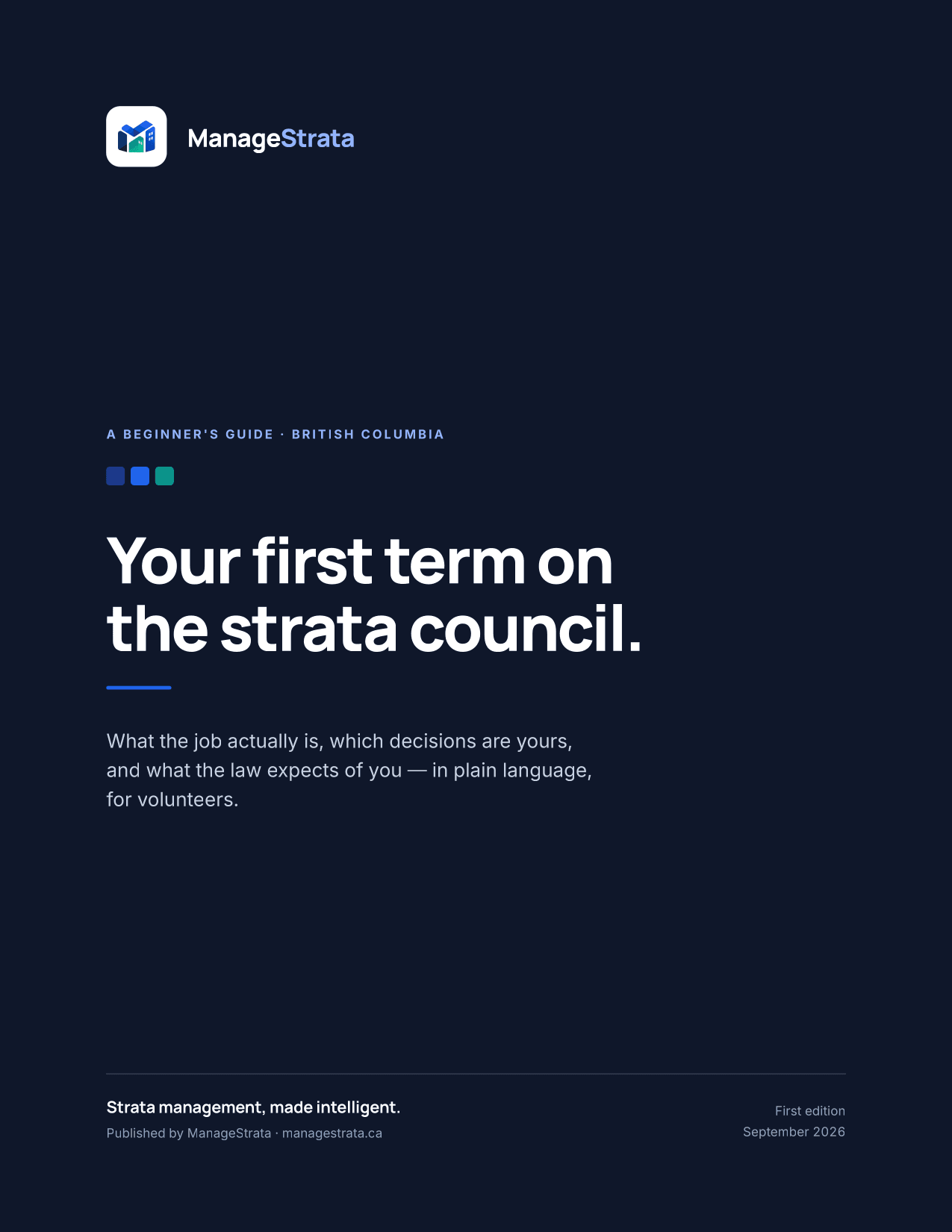
Free guide · 18 pages
Your first term on the strata council
New to the council, or handing the job to someone who is? Ten short chapters on what a BC council actually does, and the deadlines it can’t miss.
A few notes a year on running a strata
Deadlines that catch councils out, what changed in the rules, and what we shipped. Unsubscribe in one click, any time.
Run your strata with confidence
ManageStrata tracks your compliance deadlines, AGMs, and finances — with AI that drafts the work and you approve it. Free up to 4 lots.
Start free