

Blog · Governance · 6 min read
A Year on Council: The BC Strata Calendar Month by Month
ManageStrata Team
November 1, 2026
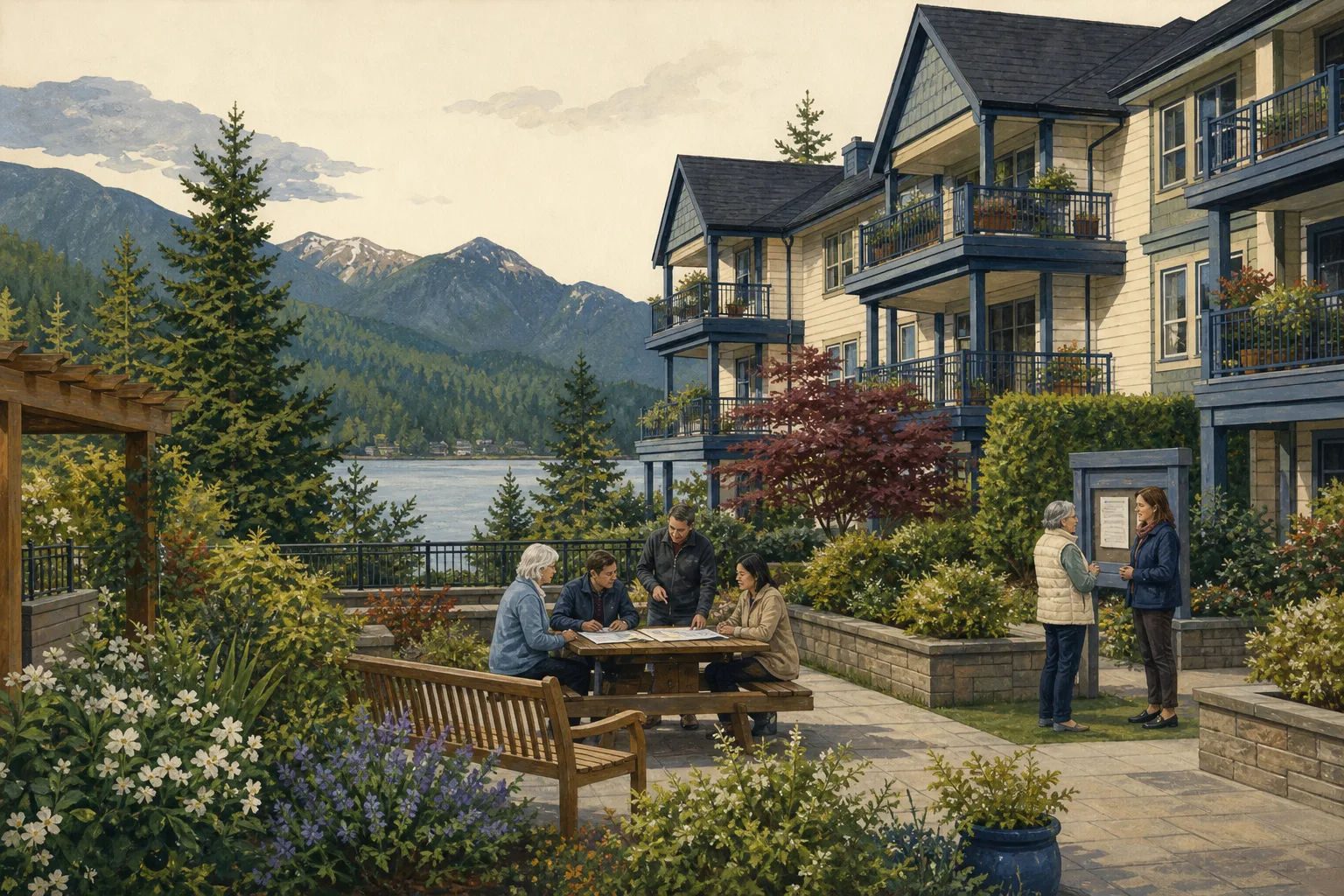
The budget package lands in owners' inboxes two weeks before the AGM, and page three mentions a roof. Nobody hid it — the engineer flagged it eighteen months ago, the treasurer has been carrying it since spring, and the council has talked about it four times. It just all arrived at once, at the one meeting of the year where owners are asked to decide.
That is what an unplanned year looks like from the floor: information that existed, but not in time to be absorbed. A working strata calendar fixes that by spreading the year's decisions out instead of stacking them on one night. Here is what the Act actually dates, what depends on your own fiscal year and bylaws, and a month-by-month rhythm you can adapt.
Your year starts at your fiscal year end, not in January
There is no statutory "AGM season." Your calendar hangs off your strata's fiscal year, and the corporation can change those dates by a 3/4 vote at a general meeting held after the first AGM — which may produce a budget period longer or shorter than 12 months within the limits the section sets (s.102).
A "3/4 vote" means at least 3/4 of the votes cast by eligible voters present in person or by proxy when the vote is taken, excluding abstentions — not 3/4 of all owners (s.1). At each AGM, eligible voters present in person or by proxy must elect a council (s.25).
The fixed points every council should pin first
- Notice of a general meeting: at least 2 weeks. Notice sent by email, mail or fax is conclusively deemed received four days after it is sent, so an emailed package realistically goes out about 18 days ahead (s.45 and s.61, Part 4; see also the province's guide to general meetings).
- Electronic or hybrid meetings need no bylaw. Since November 24, 2022, every BC strata may hold them and accept electronic votes without passing a bylaw.
- The budget sets the fees. Owners approve it by majority vote (s.103). If it is defeated, a new budget goes to an SGM within 30 days — or a longer period approved by a 3/4 vote at that meeting — and owners keep paying the previous monthly fees until one passes (s.104). Owners must be told their new fee within two weeks of approval (ss.103–106, Part 6).
- Minimum CRF contribution. Every strata corporation and section must budget at least 10% of the total budgeted operating-fund contribution to the contingency reserve fund, determined after considering the most recent depreciation report (budgeting and strata fees).
A month-by-month rhythm (count backwards from fiscal year end)
- Months 1–2 after the AGM: confirm officers, confirm who holds the records, review the insurance renewal date and the current bylaws. If an owner wants to understand what changed, start with bylaws versus rules.
- Every month: arrears review; fire and life-safety systems inspected, tested and maintained at the interval the BC Fire Code sets for each system — monthly, annually or otherwise. There is no single "annual fire inspection" of a whole building in the Act or the Code; keeping those systems in order is part of the duty to repair and maintain common property (s.72).
- Quarterly: financial statements to council, depreciation-report items checked against reality, minutes circulated. Our guide to preparing AGM minutes applies to council minutes too.
- 90 days before insurance renewal: request quotes and the loss history.
- 4 months before fiscal year end: first draft budget, including the CRF contribution and anything the depreciation report recommends for the coming year.
- 2–3 months before fiscal year end: finalize the budget, decide whether any resolution (a special levy, a significant change to common property) needs to be on the notice, then issue notice with the 4-day deemed-receipt rule in mind.
- Year-round, on demand: a Form B Information Certificate or Form F Certificate of Payment is due within one week of a request; most other records under s.36 are due within two weeks, and the bylaws or rules within one week (s.36, Part 4). Form B's required attachments are exactly three: the rules, the current budget, and the most recent depreciation report obtained under s.94 (Form B).
Questions councils ask about the annual schedule
Does the AGM have to be held in a particular month? The Act does not name a month. What it fixes is the notice period and the business that must happen at the meeting, including electing a council (s.25). Your own bylaws may add timing requirements, so check your registered bylaws.
Can owners remove a council member mid-year? Unless all owners are on council, the strata corporation may remove one or more council members by a majority vote at an annual or special general meeting, and must hold an election at that same meeting to fill the remainder of the term (Standard Bylaw 11) — subject to how your own bylaws read.
When does a bylaw amendment take effect? Not when it passes. A bylaw amendment has no effect until it is filed in the Land Title Office, and the corporation must inform owners and tenants as soon as feasible after approval. There is no deadline for filing — the old 60-day rule was repealed (s.128).
Multi-year deadlines that belong on the same calendar
- Depreciation reports are required for strata corporations of 5 or more lots, by July 1, 2026 in Metro Vancouver, the Fraser Valley and the Capital Regional District, and July 1, 2027 elsewhere in BC, renewing every five years and prepared by a qualified person (requirements).
- Electrical planning reports are required for 5+ lot corporations by December 31, 2026 (Metro Vancouver / Fraser Valley / Capital RD) or December 31, 2028 elsewhere; stratas under 5 lots instead need an EV-charging approval process by December 31, 2026 (details).
- Records retention is not one period. Correspondence is kept at least 2 years; minutes, books of account, budgets and financial statements at least 6 years; contracts including insurance policies at least 6 years after they end; depreciation and electrical planning reports permanently; bylaws and rules only as a current copy (Regulation s.4.1).
What a healthy strata does about it
A healthy strata is ahead of its year rather than behind it. The calendar is written down and visible to owners, not carried in one treasurer's head. Decisions are minuted when made, so the AGM confirms what owners already know instead of surprising them. And the calendar survives a change of council or a change of manager — because the records belong to the corporation, whether it is self-managed or works with a property manager, which is a choice the Act leaves entirely to the corporation.
ManageStrata exists for that last part: the council or the management company can change, but the documents, minutes, votes and books stay with the corporation, and council can export a full copy at any time. For making sense of a pile of inherited documents, SearchStrata offers AI analysis of strata records so a new council can find the obligations buried in them.
This article is general information about BC strata law, not legal advice; verify against the current Strata Property Act and Regulation or consult a BC strata lawyer.
General information, not legal advice. This article explains British Columbia strata law in general terms. The Strata Property Act and its regulations change over time and apply differently to each strata corporation. Confirm details against the current legislation or consult a qualified strata lawyer before acting.
Frequently asked questions
- How far in advance must notice of an AGM go out in BC?
- Notice must be at least 2 weeks. If it is sent by email, mail or fax, it is conclusively deemed received four days after sending, so councils generally send emailed packages about 18 days before the meeting. Only notice handed to the person or left at the strata lot counts the day it is delivered.
- What happens if owners vote down the annual budget?
- The strata must put a new budget to a special general meeting within 30 days, or a longer period approved by a 3/4 vote at that meeting. Until a budget passes, owners keep paying the same monthly fees as under the previous budget, and once approved they must be told their new fee within two weeks.
- Can an owner appeal a council decision at the AGM?
- No. There is no statutory right to appeal a council decision at a general meeting. An owner or tenant may apply in writing for a hearing at a council meeting, which must be held within four weeks, with a written decision within one week of the hearing where a decision was sought. Beyond that, the routes are the Civil Resolution Tribunal or the courts.
Keep reading
Free guide · 18 pages
Your first term on the strata council
New to the council, or handing the job to someone who is? Ten short chapters on what a BC council actually does, and the deadlines it can’t miss.
A few notes a year on running a strata
Deadlines that catch councils out, what changed in the rules, and what we shipped. Unsubscribe in one click, any time.
Run your strata with confidence
ManageStrata tracks your compliance deadlines, AGMs, and finances — with AI that drafts the work and you approve it. Self-managed or with a manager, the record stays with your corporation. Free up to 4 lots.
Start free