

Blog · Governance · 5 min read
Do Strata Bylaws Apply to Tenants? Enforcing Against Renters in BC
ManageStrata Team
October 27, 2026
Short answer: yes. In British Columbia, a tenant in a strata lot must follow the strata corporation's bylaws and rules, and the strata corporation can enforce against the tenant directly — including by fining the tenant. But the enforcement path has moving parts: who gets notice, who can be billed, and what the strata's own registered bylaws say about fine amounts.
Tenants Are Bound by the Bylaws — and the Landlord Has to Tell Them
Before renting all or part of a residential strata lot, a landlord must give the prospective tenant the current bylaws and rules and a Notice of Tenant's Responsibilities in the prescribed form. Within 2 weeks of renting, the landlord must give the strata corporation a copy of that notice signed by the tenant (Strata Property Act s.146). The prescribed form is Form K, which tells the tenant in plain terms that the bylaws and rules can change, that the tenant must comply with the changed version, and that the tenant may be fined or billed for remediation costs if the tenant, an occupant or a visitor contravenes them.
If the landlord skips those steps, the tenant is still bound by the bylaws and rules — but the tenant may, within 90 days of learning of the failure, end the tenancy agreement without penalty by giving notice to the landlord, and the landlord must then pay the tenant's reasonable moving expenses to a maximum of one month's rent (s.146(3) and (4)).
If your council isn't receiving signed Form Ks, that's worth a standing agenda item. Knowing which lots are tenanted is the difference between serving enforcement notices on the right people and serving them on the wrong ones.
Who Can Be Fined: Owner or Tenant?
Section 130 of the Act splits this cleanly (Strata Property Act s.130):
- The strata corporation may fine an owner for a contravention by the owner, by the owner's guests or invitees, or by an occupant if the strata lot is not rented to a tenant.
- The strata corporation may fine a tenant for a contravention by the tenant, by the tenant's guests or invitees, or by an occupant if the strata lot is not sublet.
So in a tenanted lot, the guest who props open the parkade door is the tenant's responsibility for fining purposes — not the owner's, as a starting point.
Q&A: Enforcing Against a Renter
Q: Do we have to follow the section 135 process before fining a tenant?
Yes, and there is an extra step. Before imposing a fine, requiring payment of the costs of remedying a contravention, or denying use of a recreational facility, the strata must have received a complaint, given the owner or tenant written particulars of the complaint and a reasonable opportunity to answer it including a hearing if requested, and — if the person is a tenant — given notice of the complaint to the tenant's landlord and to the owner. The written decision must follow as soon as feasible (s.135). Miss a step and the fine is not enforceable.
Q: Can we collect the fine from the owner if the tenant won't pay?
Yes. Where the strata fines a tenant or requires a tenant to pay remediation costs, it may collect from the tenant, that tenant's landlord and the owner — but not more than the total amount of the fine or costs (s.131). If the landlord or owner pays, the tenant owes them that amount. A landlord cannot assign away this responsibility to the tenant, even when other landlord powers and duties are assigned under s.147 or under a long-term lease of 3 years or more under s.148.
Q: How much can we fine?
That depends on your registered bylaws. The Standard Bylaws set a maximum of $50 per bylaw contravention and $10 per rule contravention, and allow a fine every 7 days for an uninterrupted continuing contravention (Standard Bylaw 24). Many strata corporations have amended those figures upward. The ceiling a strata may set in its bylaws is in Regulation s.7.1: $200 per bylaw contravention, $50 per rule contravention, and $1,000 per contravention of a bylaw prohibiting or limiting short-term vacation or temporary accommodation — with continuing contraventions finable no more often than every 7 days, or daily for the short-term accommodation bylaw. Check what your own bylaws actually say before issuing a notice; see Strata Bylaws vs Rules in BC for why the distinction changes the amount.
Beyond Fines: Remediation and Eviction
The strata corporation may do what is reasonably necessary to remedy a contravention — including work on a strata lot or common property, and removing objects from common property — and may require the reasonable costs be paid by the person who could be fined under s.130 (s.133). Those costs still run through the s.135 process first.
Where a tenant repeatedly or continuously contravenes a reasonable and significant bylaw or rule in a residential strata lot, the Act treats that as an event allowing the landlord to serve a notice terminating the tenancy under the Residential Tenancy Act's cause provisions (s.137). The strata corporation does not evict the tenant itself; it is a landlord remedy, and whether the facts meet that bar is fact-specific.
Keep the Paper Trail
Enforcement against renters fails on documentation more often than on law: no signed Form K on file, no record of the complaint particulars, no copy of the notice to the landlord and owner. Record enforcement decisions properly in council minutes (see How to Prepare AGM Minutes in BC for the general discipline), and keep tenancy notices with the corporation's records rather than in an individual council member's inbox. ManageStrata exists for that reason — the council or management company can change, but the corporation's documents, minutes, votes and books belong to the corporation and stay put. If you are trying to work out what your amended fine bylaw or rental bylaw actually says, tools like SearchStrata can run AI analysis across your filed strata documents. Self-managed councils handling enforcement in-house may also find How to Self-Manage a Strata in BC useful.
This article is general information about BC strata law, not legal advice; verify against the current Strata Property Act and Regulation or consult a BC strata lawyer.
General information, not legal advice. This article explains British Columbia strata law in general terms. The Strata Property Act and its regulations change over time and apply differently to each strata corporation. Confirm details against the current legislation or consult a qualified strata lawyer before acting.
Frequently asked questions
- Does a tenant have to follow strata bylaws if the landlord never gave them a copy?
- Yes. Under Strata Property Act s.146(3), a tenant who was not given the current bylaws, rules and a Form K Notice of Tenant's Responsibilities is still bound by the bylaws and rules. The remedy runs against the landlord: the tenant may, within 90 days of learning of the failure, end the tenancy without penalty, and the landlord must pay reasonable moving expenses to a maximum of one month's rent.
- Who must be notified before a strata fines a tenant?
- Section 135 requires the strata to have received a complaint, to give the tenant written particulars of it and a reasonable opportunity to answer including a hearing if requested, and — because the person is a tenant — to also give notice of the complaint to the tenant's landlord and to the owner. Written notice of the decision must follow as soon as feasible. Skipping any of these steps leaves the fine unenforceable.
- Can a landlord make the tenant responsible for strata fines by contract?
- Not as against the strata corporation. A landlord may assign some or all of their powers and duties under the Act, bylaws and rules to a tenant under s.147, and a long-term lease of 3 years or more assigns them automatically under s.148, but neither can assign the landlord's s.131 responsibility for fines or the costs of remedying a contravention. If the landlord or owner pays, the tenant owes them that amount.
Keep reading
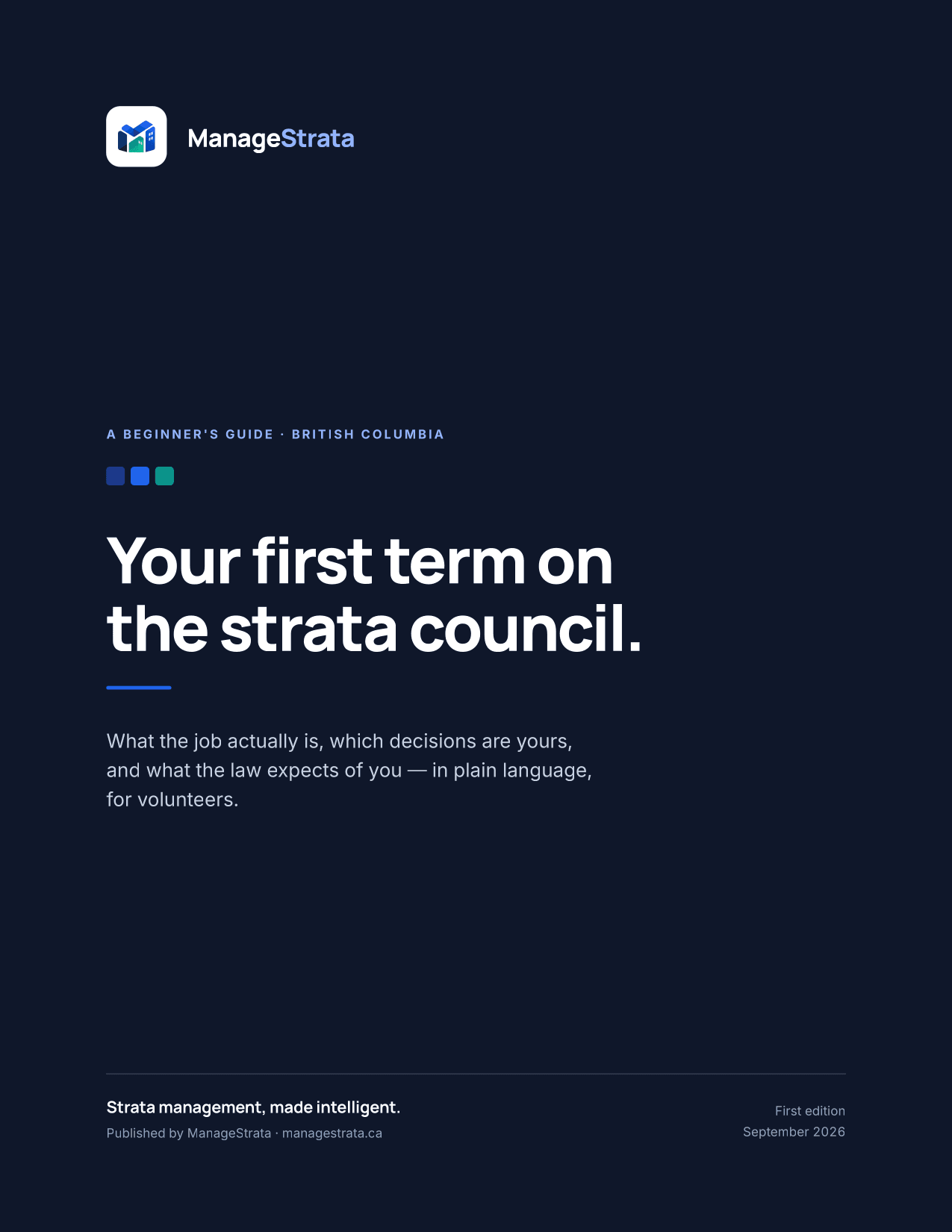
Free guide · 18 pages
Your first term on the strata council
New to the council, or handing the job to someone who is? Ten short chapters on what a BC council actually does, and the deadlines it can’t miss.
A few notes a year on running a strata
Deadlines that catch councils out, what changed in the rules, and what we shipped. Unsubscribe in one click, any time.
Run your strata with confidence
ManageStrata tracks your compliance deadlines, AGMs, and finances — with AI that drafts the work and you approve it. Self-managed or with a manager, the record stays with your corporation. Free up to 4 lots.
Start free